Simulacrum
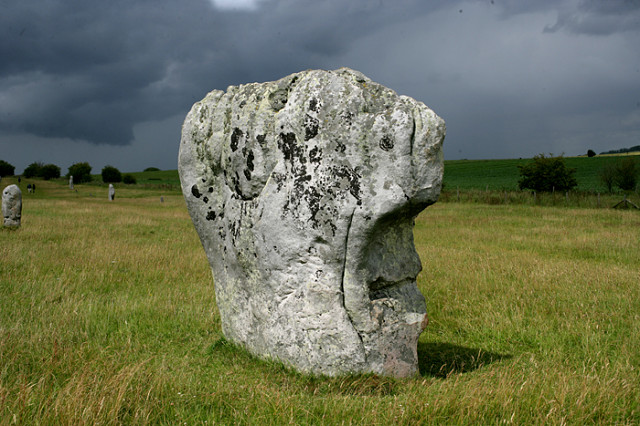
This is a stone from the Avenue at Avebury in Wiltshire. You can see that it looks very like a cowled human head. There are many stones at Avebury and a few at Stonehenge that have faces, however they are all natural boulders or sarcens.
This is what Wikipedia has to say about this phenomenon.
Simulacrum (plural: simulacra), from the Latin simulacrum which means "likeness, similarity",[1] was first recorded in the English language in the late 16th century, used to describe a representation, such as a statue or a painting, especially of a god. By the late 19th century, it had gathered a secondary association of inferiority: an image without the substance or qualities of the original.[2] Philosopher Fredric Jameson offers photorealism as an example of artistic simulacrum, where a painting is sometimes created by copying a photograph that is itself a copy of the real.[3] Other art forms that play with simulacra include Trompe l'oeil,[4] Pop Art, Italian neorealism and the French New Wave.[3]
129
views
- 0
- 0
- Canon EOS-1Ds Mark II
- f/9.0
- 50mm
- 100
Comments
Sign in or get an account to comment.


